
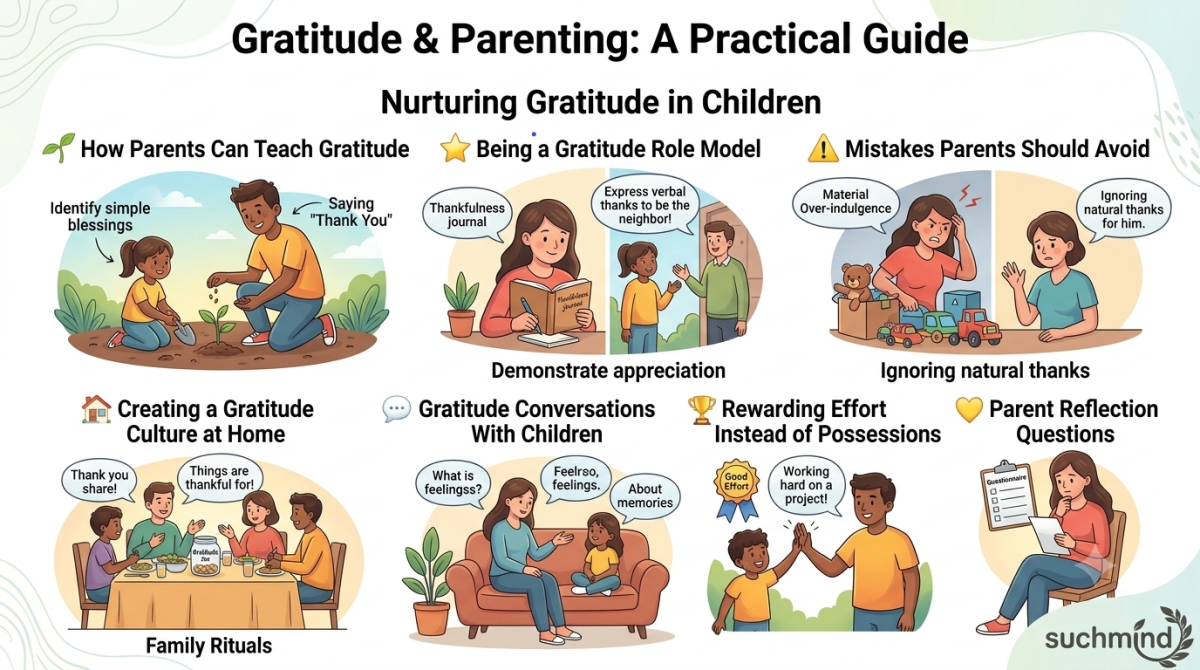
👨👩👧 Nurturing Gratitude in Children
Gratitude is a life skill that grows through daily experiences, conversations, and examples. Parents play an important role in helping children notice kindness, appreciate what they have, and develop a thankful heart that supports emotional growth and positive relationships.
🌱 How Parents Can Teach Gratitude
"Small Lessons Create a Thankful Heart"
Gratitude is not something children learn only through instructions; they learn it through everyday experiences. Parents can gently guide children to notice the efforts, kindness, and blessings around them.
Simple Ways Parents Can Teach Gratitude:
- Practice daily appreciation: Ask your child, "What is one good thing that happened today?"
- Help children notice efforts: Teach children to appreciate the people behind the things they receive.
- Encourage thank-you habits: Teach children to say "Thank you" with meaning, not just as a routine.
- Include gratitude in family routines: Share gratitude thoughts during meals or bedtime.
🌟 Children learn gratitude when they experience it, express it, and see it around them.
🌟 Being a Gratitude Role Model
"Children Follow What They See"
Parents are the first teachers of gratitude. Children observe how adults respond to situations, people, and everyday experiences.
Parents Can Show Gratitude By:
- Saying "Thank you" to family members and helpers.
- Appreciating simple moments like a beautiful morning or family meal.
- Showing kindness even during difficult situations.
- Expressing appreciation for efforts, not only results.
- Talking positively about people and experiences.
Example:
- ❌ Nobody helps me.
- ✅ I appreciate the people who support our family.
💛 Your actions become your child's lessons.
⚠️ Mistakes Parents Should Avoid
"Gratitude Grows Through Guidance, Not Pressure"
Parents sometimes unintentionally create unhealthy attitudes toward gratitude. Understanding common mistakes helps children develop genuine appreciation.
Avoid These Mistakes:
- Forcing children to say thank you without understanding: Help children understand the feeling behind gratitude.
- Comparing children with others: Comparison can reduce appreciation and create dissatisfaction.
- Only focusing on achievements: Appreciate effort, kindness, and improvement.
- Giving too many material rewards: Teach children that happiness also comes from experiences and relationships.
- Ignoring children's feelings: Allow children to express disappointment while finding positive perspectives.
🌱 True gratitude comes from understanding, not obligation.
🏡 Creating a Gratitude Culture at Home
"Make Appreciation a Way of Living"
A gratitude culture develops when appreciation becomes a natural part of family life.
Ideas to Create Gratitude at Home:
- Family Gratitude Time: Share one thing each person is thankful for every day.
- Gratitude Wall: Create a space where family members can add thankful notes.
- Celebrate Kindness: Notice and appreciate acts of caring.
- Appreciate Daily Efforts: Thank family members for small contributions.
- Create Gratitude Traditions: Practice gratitude during celebrations and special occasions.
🏡 A home filled with appreciation becomes a place where kindness grows.
💬 Gratitude Conversations With Children
"Ask Questions That Open Their Hearts"
Meaningful conversations help children think deeply about appreciation and kindness.
Conversation Starters:
- What made you happy today?
- Who helped you today?
- What is something you enjoyed today?
- What is one thing you appreciate about our family?
- What is something someone did that made you feel special?
- How did you make someone else happy today?
Tips for Parents:
- Listen without correcting immediately.
- Show interest in your child's thoughts.
- Share your own gratitude experiences.
- Encourage honest expressions.
💬 Gratitude conversations create deeper family connections.
🏆 Rewarding Effort Instead of Possessions
"Celebrate Growth, Not Just Things"
Children develop a stronger sense of gratitude when they learn to value effort, learning, and personal growth rather than only receiving rewards.
Encourage Appreciation For:
- Effort: I am proud of how hard you tried.
- Improvement: You learned something new today.
- Kindness: That was thoughtful of you to help someone.
- Responsibility: Thank you for taking care of your things.
- Persistence: You kept trying even when it was difficult.
Instead of:
- ❌ You won, so you deserve a gift.
Try:
- ✅ I appreciate your dedication and hard work.
🌈 When children value effort, they learn that growth itself is a reward.
💛 Parent Reflection Questions
- Do I regularly express gratitude in front of my child?
- Do I appreciate efforts more than achievements?
- Do we have family moments to share gratitude?
- Do my words and actions show appreciation?
- Am I helping my child notice the good things in life?